

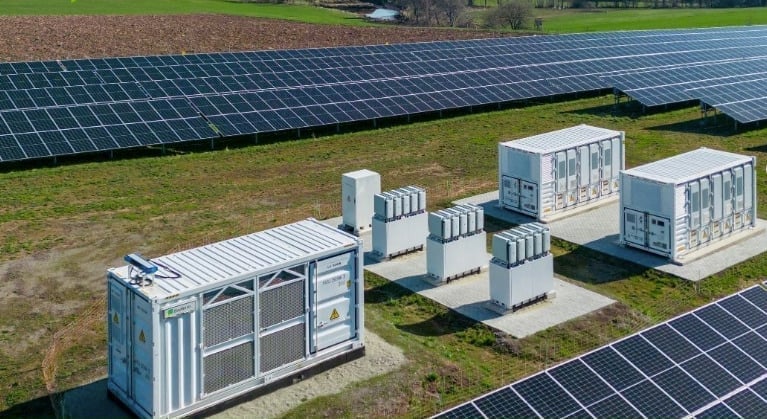
The conversation around home battery storage in Australia has shifted considerably. A few years ago, the question was whether batteries were worth it at all. Today, with battery prices having fallen substantially and with feed-in tariffs in Western Australia now significantly lower than retail electricity rates, the question is more specific: is a battery right for your household’s situation right now, or does it make more sense to wait?
For Mandurah homeowners with solar panels already installed, or those planning a new system, this question deserves a genuinely honest answer rather than a sales pitch in either direction. Battery storage makes excellent sense for some households and poor financial sense for others, and the difference comes down to a combination of consumption patterns, existing system configuration, and the household’s specific goals.
This guide works through the battery decision honestly, covering how home storage actually works in the Western Australian context, what the financial case looks like under current tariff conditions, and how the integrated solar-battery platforms available in Mandurah today compare to the add-on approaches of earlier generations.
How Home Battery Storage Actually Works
A home battery system stores surplus solar generation that would otherwise be exported to the grid. Instead of sending excess electricity to Western Power at the relatively low feed-in tariff rate, the battery captures it and releases it later, typically in the evening when the solar panels are no longer generating but the household is still consuming electricity.
The efficiency of this cycle matters to the financial case. Most lithium battery systems operate at a round-trip efficiency of around 90 to 95 percent, meaning for every 100 units of electricity stored, approximately 90 to 95 units are available for use on discharge. This efficiency loss is a real cost that must be accounted for in any honest financial assessment.
The battery also has a power rating (how fast it can charge or discharge) and an energy capacity rating (how much it can store in total). A household that needs to run multiple high-power appliances simultaneously from the battery requires adequate power rating, not just adequate capacity. A battery with large capacity but low power output may not be able to support the household’s actual evening consumption pattern even though the stored energy is technically available.
For Mandurah residents exploring solar battery installation for their homes, understanding these specifications and how they match the household’s actual evening consumption profile is the essential starting point for a genuine assessment.
The Western Australian Feed-in Tariff Context
Western Australia’s feed-in tariff situation is an important factor in the battery financial case, and it differs from the eastern states in ways that affect the calculation.
The Distributed Energy Buyback Scheme (DEBS) in WA pays different rates for solar exports depending on the time of day. The peak DEBS rate applies during the late afternoon and evening period, when the grid most values additional supply. The off-peak rate, which applies during the middle of the day when solar generation peaks, is lower.
This time-differentiated tariff structure changes the battery mathematics in an important way. A battery that stores solar generation from the high-production midday period and releases it in the evening captures the difference between the low daytime export rate and the avoided retail import rate. However, if the household could instead time-shift that export to the higher-rate evening window, the financial case changes.
Understanding the specific DEBS rates applicable to your installation and retailer arrangement is essential before making a battery investment decision. Your solar installer should be able to model the financial case using actual current rates rather than generic assumptions.
Integrated Platforms vs Add-On Battery Systems
One of the most important technical decisions in a home battery installation is whether to use a battery that is integrated with the solar inverter or one that is added as a separate component to an existing system.
Integrated platforms combine the solar inverter and battery inverter functions in a single device, typically called a hybrid inverter, with a battery pack connected to it. The energy management software is unified, communication between the solar generation and storage systems is seamless, and the monitoring is handled through a single platform.
The advantage of integrated platforms is performance and simplicity. When the solar inverter and battery system speak the same language, the energy management is more sophisticated and more reliable than when two systems from different manufacturers must communicate through protocols that were not designed for each other.
For Mandurah homeowners planning a new system and wanting to include battery storage, exploring regarding installation of SAJ integrated solar inverters and battery storage systems is worthwhile. Integrated platforms of this type manage the flow of electricity between solar generation, battery storage, home consumption, and grid import and export from a unified control system that optimises for the household’s specific tariff structure.
Retrofit battery systems can be added to existing solar installations with conventional string inverters. These typically use a separate battery inverter that is AC-coupled to the existing system. While perfectly functional, the communication between the two systems is less seamless and the energy management is generally less sophisticated than a purpose-built integrated platform.
Who Benefits Most from Battery Storage in Mandurah
Not all households benefit equally from home battery storage. The situations where the financial case is strongest:
High evening consumption. A household that uses most of its electricity in the morning and evening, with relatively low daytime consumption, has the most to gain from storage. Without a battery, this household exports its midday solar surplus at a low feed-in rate and then imports grid electricity at a high retail rate in the evening. A battery captures the surplus and eliminates or reduces the evening import.
Work-from-home households. Households where someone is home during the day consuming electricity actually have relatively high daytime self-consumption already, which reduces the amount of surplus available to charge a battery. For these households, a smaller battery that captures only the genuine surplus may be more appropriate than the largest available capacity.
Grid reliability concerns. For households that experience power outages, whether from the grid or from severe weather events, battery storage with backup capability provides security that purely financial calculations do not capture. This value is real and meaningful, though it is difficult to quantify in simple financial terms.
Households approaching the limit of their existing solar system. A household that wants to add more solar capacity but has reached the 5kW export limit can benefit from battery storage as a way to utilise additional generation that could not otherwise be exported.
Sizing a Solar Battery System for Mandurah Conditions
Choosing the right battery size is a balance between storage capacity, cost, and the household’s realistic usage pattern.
A battery that is oversized for the available solar surplus will never charge fully, reducing the utilisation rate and lengthening the payback period. A battery that is undersized relative to evening consumption will empty before morning, leaving the household importing grid electricity for part of the night.
The starting point for sizing is the household’s evening energy consumption, which can be read from electricity bills or from a smart meter data download. The typical Mandurah household uses between 5 and 15 kilowatt-hours of electricity in the evening, depending on household size, air conditioning use, and lifestyle patterns.
The available solar surplus for battery charging depends on the system size and the household’s daytime consumption. A 6.6-kilowatt solar system in Mandurah generates approximately 25 to 30 kilowatt-hours on a clear summer day. A household consuming 10 kilowatt-hours during the day leaves roughly 15 to 20 kilowatt-hours as surplus, of which the battery can capture the amount it is sized for.
In practice, a battery of 10 to 15 kilowatt-hours capacity suits most medium-sized Mandurah households that want meaningful overnight coverage.
What Mandurah’s Solar Resource Means for Battery Performance
Mandurah’s solar resource is genuinely exceptional. The Peel region receives some of the highest annual solar irradiance of any major Australian population centre, with average peak sun hours that make solar investment more productive here than in most comparable markets globally.
For battery storage, this exceptional solar resource has a specific implication: the battery is more reliably charged each day. In lower-irradiance locations, consecutive cloudy days can deplete a battery without sufficient solar generation to recharge it. In Mandurah, truly consecutive overcast days are unusual, and even overcast conditions typically produce sufficient generation to meaningfully recharge a battery.
This reliability of charging is one of the practical factors that makes battery investment in Mandurah more defensible than in comparable analyses conducted for less sunny locations. The battery is doing useful work on more days per year, which improves the utilisation rate that underpins the financial case.
What to Ask Before Committing to a Battery Purchase
Before committing to a battery installation, the following questions deserve honest answers from your installer:
- What is the specific payback period based on current DEBS rates and my actual consumption pattern?
- What is the battery’s warranty in terms of capacity retention and years?
- What happens to the battery management if the installer is not available for support in five years?
- Does the battery have backup capability, and if so, what can it power during a grid outage?
- Is the inverter compatible with batteries from multiple manufacturers, or am I locked to a single supplier for future replacement?
For solar panels in Mandurah WA installations, whether battery storage is included from the outset or planned for future addition, an installer who can provide specific, data-based answers to these questions demonstrates the genuine competence that this investment decision requires.
Conclusion
Home battery storage in Mandurah is a genuine and increasingly compelling investment for the right household. The combination of falling battery costs, Western Australia’s time-differentiated feed-in tariff, and Mandurah’s exceptional solar resource creates conditions where a properly sized and correctly specified battery system can meaningfully reduce electricity bills and provide genuine energy independence.
The key is making the decision on the basis of honest financial modelling specific to your household rather than on sales enthusiasm or generic industry averages. Get the numbers on your actual situation, understand the specifications of the battery system you are considering, and make the decision with confidence based on the facts.