

Home security is a paramount concern for homeowners around the world. Over the centuries, the technology behind securing homes has transformed drastically, responding to the changing needs and innovations of the times. The humble lock, once a simple mechanical device, has now become a highly sophisticated and crucial part of home security systems. Let’s explore how lock technology has evolved and how these advancements have contributed to a more secure living environment.
Early Locks: The Birth of Basic Security
The first known locks date back to ancient Egypt around 4,000 years ago. These early locks were made from wood and used simple pins and bolts to secure doors. While they were effective in their time, they were easily bypassed with basic tools or brute force. The locks served more as a deterrent than a true barrier to entry. This period laid the foundation for the principles that would guide lock technology for centuries.
The Advent of Metal Locks: Durability and Strength
The next major leap in lock technology came with the introduction of metal in lock construction. Iron locks emerged around 1,000 years ago, offering far more strength and durability than their wooden predecessors. These metal locks were often made with intricate designs and featured pin tumbler mechanisms, which are still the foundation of many modern locks. The pin tumbler lock works by aligning pins inside the lock when the correct key is inserted, allowing the mechanism to turn and unlock the door.
These metal locks became more sophisticated over time, incorporating complex designs that made them harder to pick. The development of stronger materials meant that locks could now withstand much more force, offering a higher level of security than ever before. However, even these metal locks could still be picked or bypassed by determined intruders, leading to the next phase in lock technology.
The Introduction of Combination Locks: Adding Complexity
As the need for more advanced security grew, combination locks came into play in the 19th century. These locks utilized rotating discs or dials, which required a specific combination to open. Unlike traditional keyed locks, combination locks did not rely on a physical key, which added another layer of security. This shift was particularly important for safes and high-security areas where the risk of key duplication or loss was a concern.
Combination locks were an improvement in terms of both security and convenience. They were not immune to tampering, though, as skilled intruders could still decipher the combination. Nevertheless, the move toward a combination system marked a significant step forward in lock design, offering more versatility and security.
The Rise of Electronic Locks: A New Era
The real transformation in lock technology came with the advent of electronics in the 20th century. Electronic locks replaced traditional mechanical systems with sophisticated electrical components, allowing for greater flexibility and functionality. These locks could be controlled by keypads, card readers, or even biometric systems such as fingerprint recognition.
Electronic locks eliminated many of the vulnerabilities associated with mechanical locks. For example, the use of key cards or biometric data meant that there was no physical key that could be lost or copied. Additionally, electronic locks could be integrated with home security systems, enabling remote control and monitoring through smartphones or central hubs. This integration allowed homeowners to lock and unlock doors from virtually anywhere, offering unmatched convenience and peace of mind.
Smart Locks: The Modern Solution to Home Security
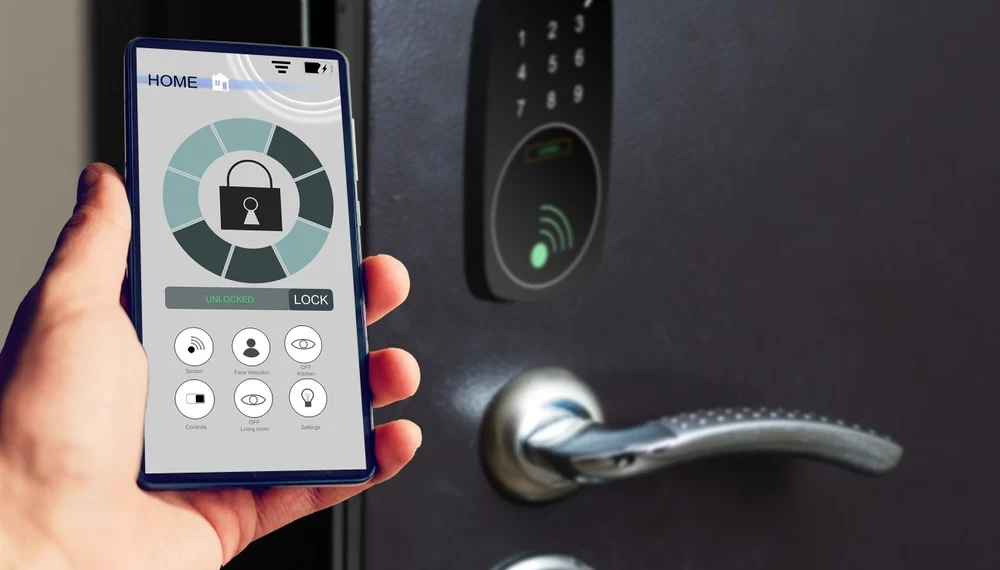
Today, smart locks represent the cutting edge of home security. These locks combine the best features of traditional and electronic systems while incorporating the latest in digital technology. Smart locks are typically connected to home automation systems, allowing homeowners to lock and unlock doors remotely through their smartphones, tablets, or even voice assistants like Amazon Alexa or Google Assistant.
One of the key features of smart locks is their ability to offer keyless entry. Rather than relying on physical keys or combinations, smart locks use wireless communication protocols such as Bluetooth or Wi-Fi to connect to devices. Homeowners can set up temporary digital keys for guests, monitor entry logs, and receive notifications when someone enters or leaves the house. This level of control and monitoring is a game changer for home security.
Moreover, smart locks often include enhanced features like auto-locking mechanisms, which automatically secure the door after a specified time, and integration with other smart home devices, such as security cameras and alarms. This seamless integration creates a comprehensive security ecosystem that is both intuitive and highly effective.
The Future of Lock Technology: Biometric and AI-Driven Security
Looking to the future, the next frontier in lock technology seems to be heavily focused on biometric authentication and artificial intelligence (AI). Biometric locks, such as those using facial recognition, retina scanning, or even DNA testing, offer an additional layer of personalized security. These systems eliminate the need for passwords or keys altogether, relying on the unique characteristics of an individual’s body to grant access.
Artificial intelligence will also play a significant role in the future of locks, with the ability to detect patterns of behavior and adapt to potential threats. AI-powered locks could analyze data such as unusual movement patterns around the door, or even temperature fluctuations that might suggest forced entry attempts, and then automatically alert homeowners or authorities.
The Role of Locks in Comprehensive Home Security Systems
While locks have evolved dramatically, they are only one piece of the puzzle in comprehensive home security. Modern security systems often combine locks with surveillance cameras, motion detectors, alarms, and other smart devices. The most secure homes today use a multi-layered approach, integrating various technologies that complement each other.
Locks, however, remain the first line of defense, and their evolution continues to reflect advancements in both technology and the increasing importance of home security in our daily lives. With each innovation, locks become more effective, user-friendly, and responsive to the needs of homeowners.
In the modern world, lock technology has come a long way from the wooden bolts of ancient Egypt. From mechanical to electronic, and now to smart and biometric systems, lock technology continues to evolve, enhancing home security in ways that were once unimaginable. As we look forward to the future, one thing is clear: the evolution of lock technology will continue to adapt to the ever-changing landscape of security needs, ensuring that homeowners have the most effective tools at their disposal to protect what matters most.