

Crowley wears its identity proudly — the self-proclaimed Rice Capital of America sits in the heart of Acadia Parish, surrounded by some of the most productive rice and crawfish farming country in the United States. The flat, fertile land and the unique agricultural ecosystem that sustains Crowley’s economy also creates a pest environment that is unlike almost anywhere else in Louisiana.
For homeowners in Crowley, Crowley pest control means understanding the interplay between agricultural land use, seasonal flooding from rice cultivation, and the urban pest pressures that come with any residential community. This isn’t your average suburban pest problem — it’s shaped by the land itself.
How Rice Farming Creates Unique Pest Pressure
Rice cultivation requires flooding fields for substantial portions of the growing season. This managed flooding is central to the crop’s growth cycle, but it has direct consequences for pest populations in and around Crowley.
The most immediate effect is on mosquito populations. Flooded rice fields provide enormous volumes of standing water that serve as mosquito breeding habitat. During the rice growing season, which runs roughly from April through August, mosquito populations in Acadia Parish can be significantly higher than in areas without agricultural flooding nearby. Homeowners within a mile or two of active rice fields may notice dramatically elevated mosquito activity during these months.
The flooding also keeps soil moisture levels consistently high throughout the agricultural areas surrounding the city. This elevated soil moisture extends into residential areas, creating the kind of wet, warm soil environment that subterranean termites find ideal for colony establishment and foraging.
The Rodent Connection to Agriculture
Rice farming and the associated grain storage and processing infrastructure create substantial food resources for rodent populations. Mice and rats are native opportunists — they follow food sources and will establish populations wherever grain, seed, or other food is reliably available. Agricultural areas with grain storage facilities maintain rodent populations year-round, and those populations don’t stay confined to the farm.
As agricultural operations shift with the seasons and field conditions change, rodent populations can migrate toward residential areas. Crowley homeowners situated near the edge of town or in areas adjacent to farmland may notice increased rodent pressure at certain times of year — particularly during harvest season when field disturbance displaces rodents from their normal harborage.
Termites in Crowley: An Underappreciated Risk
The same soil moisture conditions that support rice farming also support active subterranean termite populations throughout Acadia Parish. Crowley’s flat topography means water drains slowly, keeping ground moisture elevated for extended periods after rain and irrigation events.
Termite control Crowley is not something that receives as much public attention as it does in the more densely populated urban areas of the state, but the underlying risk is very real. Here’s what Crowley homeowners specifically need to be aware of:
Moisture and Foundation Risk
Many homes in Crowley and surrounding Acadia Parish communities are built on slab-on-grade foundations. While slab construction offers certain advantages, it does not eliminate termite risk. Subterranean termites can enter slab homes through:
- Expansion joints in the concrete
- Cracks that develop over time as the slab settles
- Gaps around plumbing penetrations
- Through attached wood structures like porches and steps that have soil contact
Once inside, termites access wall framing, door frames, window frames, and structural wood from below the slab. Damage in slab homes can be particularly difficult to detect early because there is no crawl space to inspect.
Signs of Termite Activity in Crowley Homes
Homeowners should watch for the following warning signs year-round:
- Mud tubes along interior or exterior walls, particularly near the slab line
- Swarmers appearing in large numbers around exterior lights in spring evenings
- Hollow-sounding wood anywhere in the home’s interior
- Doors or windows that have become difficult to open without any apparent moisture-related cause
- Bubbling or peeling paint on interior walls without an identifiable water source
Annual professional inspections remain the most reliable tool for detecting termite activity before it reaches the point of visible structural damage.
Mosquitoes in Crowley: A More Serious Challenge Than in Most Louisiana Cities
Most Louisiana homeowners deal with mosquito pressure, but Crowley residents face a uniquely intense version of this problem. The combination of rice field flooding, crawfish pond irrigation, and the generally flat, poorly draining landscape of Acadia Parish means that mosquito breeding habitat is vastly more abundant near Crowley than in most other communities in the state.
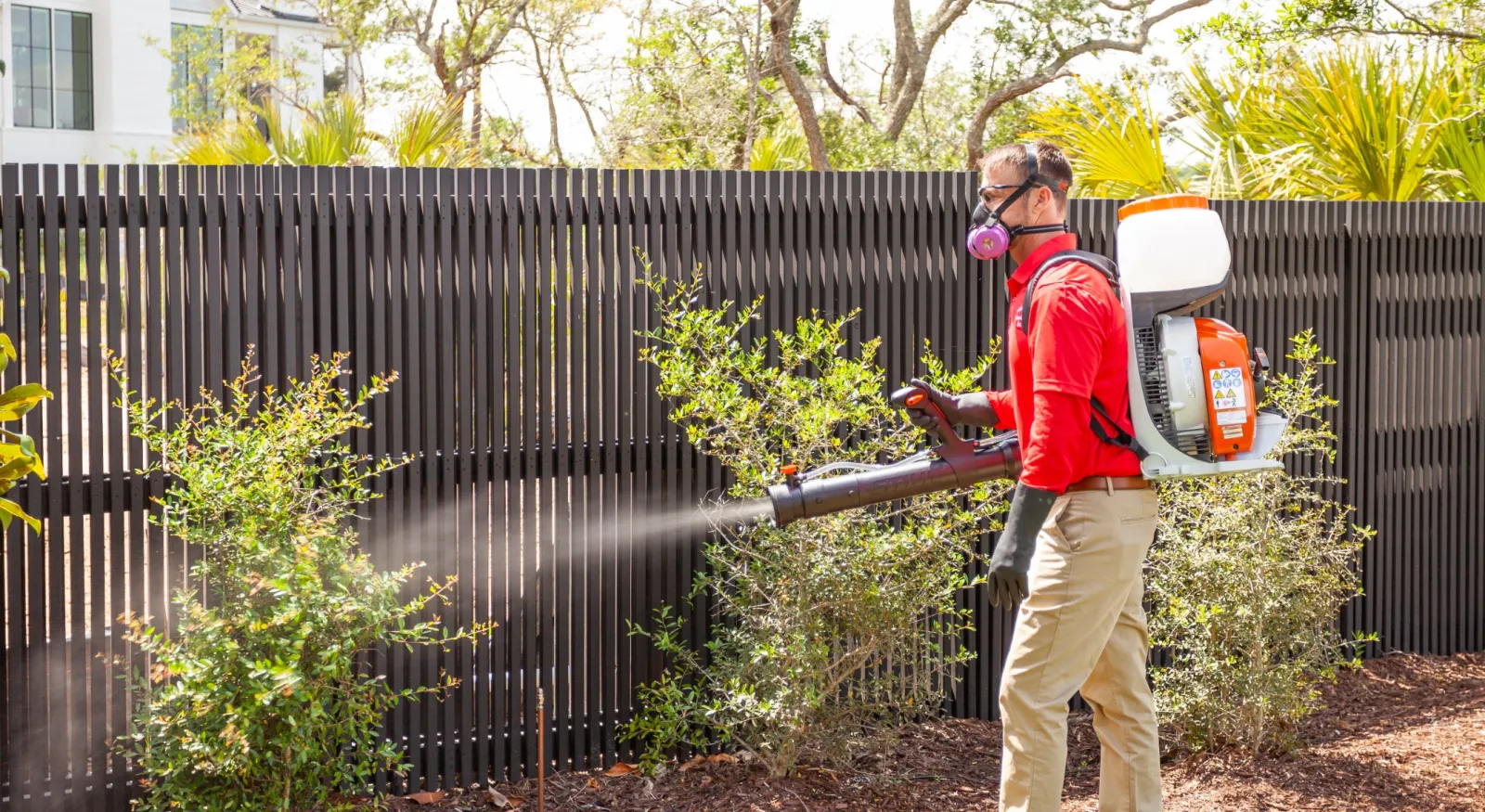
Effective mosquito control in this context requires a professional approach that goes beyond a single yard treatment. The most effective programs include:
- Barrier spray treatments applied to vegetation around the property, which kill and repel adult mosquitoes
- Larvicide applications to any standing water on the property that cannot be eliminated, preventing larvae from developing into biting adults
- Treatment scheduling aligned with agricultural cycles — applications timed to coincide with peak mosquito emergence following rice field flooding events
For families with young children, outdoor workers, or individuals with health conditions that increase their vulnerability to mosquito-borne illness, a professionally managed mosquito program is a meaningful investment in quality of life.
Other Pest Concerns for Crowley Homeowners
Crawfish Hole Burrowing Crayfish
This is a pest concern that is almost unique to South Louisiana rice country. The burrowing crayfish (also called “land crawfish” locally) dig deep burrows in yards, gardens, and around foundations that can number in the dozens per property. While not dangerous in themselves, the burrows can undermine soil stability near foundations and create harborage for other pests. Heavy infestations can also damage landscaping significantly. This is a pest that most national pest control guides simply don’t address — local expertise matters here.
Fire Ants
Fire ants are present throughout Acadia Parish and are common in the yards, garden areas, and agricultural land surrounding Crowley. They present particular challenges near homes with children and pets and can also damage electrical equipment, which is a documented issue around irrigation systems and outdoor electrical panels.
Cockroaches
American cockroaches are the most common species in the Crowley area, thriving in the warm, humid conditions that characterize South Louisiana. They enter homes through a variety of pathways and are associated with sewer systems, which in flat communities like Crowley can be under hydraulic pressure that drives insects upward into structures.
Protecting Your Property Through the Agricultural Calendar
One of the advantages of living in an agricultural community is that pest activity follows a somewhat predictable calendar. Homeowners who align their pest control program with the regional agricultural cycle can get ahead of peak pressure periods rather than reacting after populations spike.
Key timing considerations:
- March to April: Schedule termite inspection before swarm season peaks; begin mosquito barrier treatments
- May to August: Maintain monthly mosquito treatments during rice field flooding season; monitor for rodent pressure near field edges
- September to October: Harvest season rodent pressure; ensure all home entry points are sealed
- November to February: Termite monitoring continues; prepare for spring by scheduling pre-season treatments
FAQ
Q: Do rice fields near my home increase my risk of mosquito-borne illness? A: Proximity to rice fields does increase overall mosquito exposure, which statistically increases the risk of encountering mosquitoes that carry diseases like West Nile virus. The actual risk of contracting a mosquito-borne illness remains relatively low in Louisiana, but it is not zero. Professional mosquito control around your property reduces your exposure significantly.
Q: What are burrowing crayfish and how do I know if I have them? A: Burrowing crayfish are freshwater crustaceans that live in moist soil rather than open water. They create distinctive chimney-like mud mounds at the entrance to their burrows, typically 2 to 4 inches high, scattered throughout the yard. Heavy infestations can number in the dozens of mounds across a single property. They are most active during wet periods and most visible in spring and fall.
Q: Is Crowley at higher risk for termites than other Louisiana cities? A: The soil moisture conditions around Crowley related to agricultural irrigation and the flat, slow-draining landscape do contribute to elevated termite pressure. However, all of Louisiana is considered high-risk for subterranean termite activity. The distinction for Crowley homeowners is that the agricultural water management in the region maintains favorable moisture conditions for a longer portion of the year than in areas without rice farming.
Q: Can rodents from nearby farms actually migrate to my home? A: Yes. Rodents are highly mobile and will follow food sources and seasonal changes in their environment. Harvest season, when fields are disturbed and grain is moved, is a particularly common trigger for rodent movement toward residential areas. Sealing your home’s exterior and working with a pest control professional on exclusion before harvest season begins is effective preventive strategy.
Q: How often should I have my home treated for mosquitoes if I live near rice fields? A: During active rice field flooding season, monthly treatments are typically recommended for homes near agricultural areas. Some homeowners in high-pressure areas schedule treatments every three weeks during peak months. Your pest control provider can help you calibrate the frequency based on your specific location and the level of activity you are experiencing.